
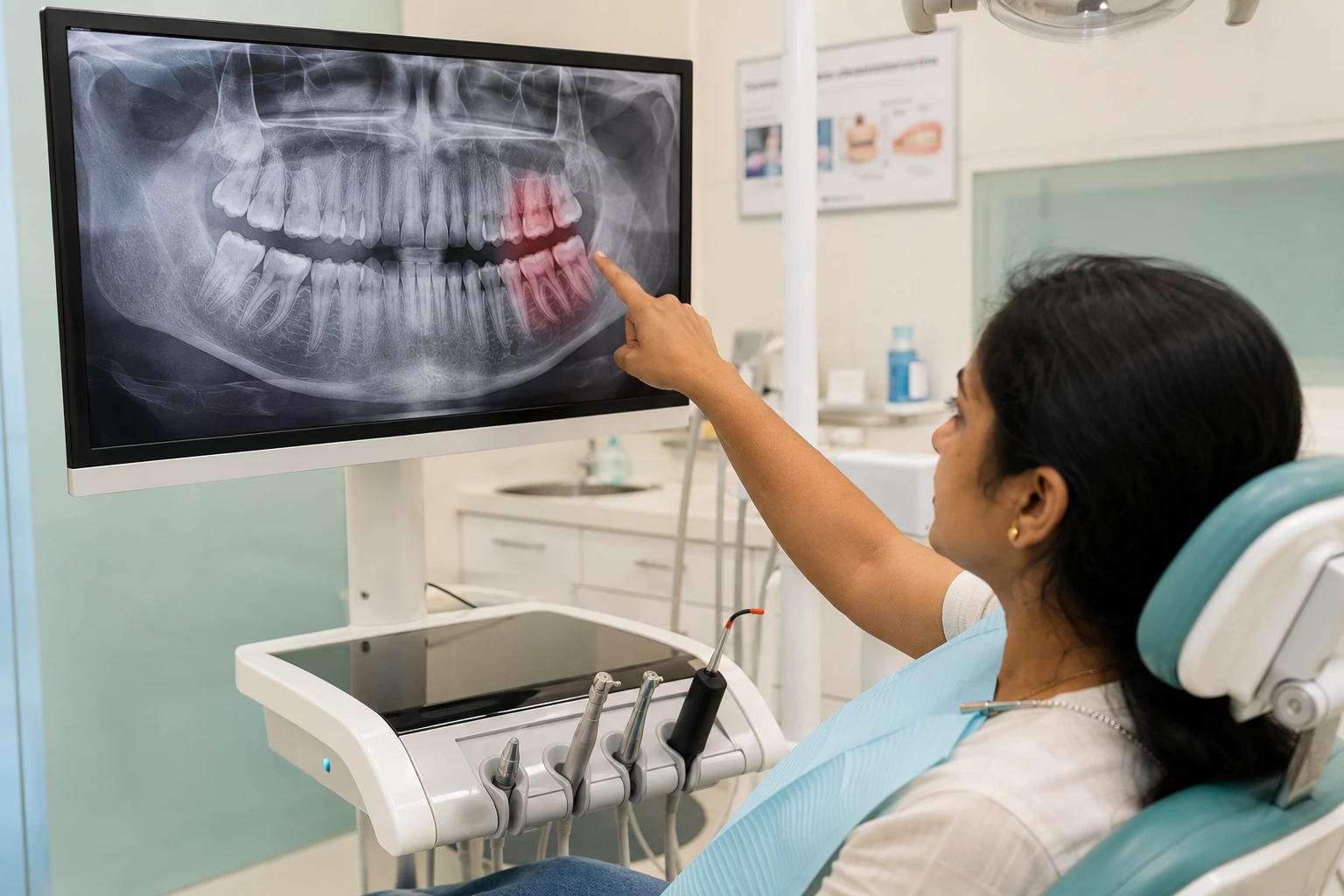
Tooth pain is one of the most uncomfortable experiences anyone can face. But not every toothache signals the need for a root canal. So how do dentists actually determine when a root canal is necessary? Understanding the diagnostic process can help ease anxiety and prepare you for what to expect during your visit to a Dentist in Kothrud.
This guide breaks down the complete diagnostic journey — from symptoms and clinical examination to advanced imaging — and explains how experienced dental professionals make the call.
What Is a Root Canal and Why Is It Needed?
A root canal is a dental procedure that treats infection or damage inside the tooth’s pulp — the soft tissue containing nerves and blood vessels. When this pulp becomes infected due to deep decay, cracks, or trauma, it cannot heal on its own. Without treatment, the infection spreads to surrounding bone, causing severe pain, abscess formation, and ultimately tooth loss.
Early and accurate diagnosis is the key to saving the tooth. That’s why the team at Tooth and Co Dental Clinic follows a thorough, multi-step diagnostic protocol before recommending any treatment.
Step 1: Patient History and Symptom Assessment
The first step in diagnosis begins with a conversation. Dr. Saloni Bavalekar listens carefully to the patient’s description of symptoms, as the nature of pain often reveals the underlying issue.
Common Symptoms That Prompt Investigation:
- Persistent, throbbing toothache that worsens at night
- Prolonged sensitivity to hot or cold temperatures (lasting more than 30 seconds)
- Sharp pain when biting or chewing
- Swelling or tenderness in the gums near a specific tooth
- Darkening or discolouration of the tooth
- A recurring pimple-like bump (fistula or dental abscess) on the gums
- Pain that radiates to the jaw, ear, or temple
Not all of these symptoms always indicate a root canal, but their combination and severity guide the dentist toward the correct diagnosis.
Step 2: Clinical Examination
After reviewing symptoms, the dentist performs a thorough hands-on clinical examination of the affected tooth and surrounding area.
Visual Inspection
The dentist visually examines the tooth for signs of deep decay, cracks, chips, or fractures. Discolouration — especially a grayish-brown hue — often suggests pulp death and internal breakdown.
Percussion Testing
The dentist gently taps the tooth with a dental instrument. Pain or tenderness on tapping indicates periapical inflammation — a sign that infection has spread to the bone surrounding the root tip.
Palpation
The gums and surrounding bone are pressed gently to check for swelling, tenderness, or the presence of an abscess. Pus discharge or a sinus tract on the gum is a strong indicator of infection.
Step 3: Pulp Vitality Tests
Pulp vitality tests help determine whether the nerve inside the tooth is alive, inflamed, or dead. These tests are non-invasive and quick.
Cold Test (Thermal Sensitivity Test)
A small cotton pellet sprayed with refrigerant (like Endo Ice) is applied to the tooth. A normal response is brief, sharp pain that disappears immediately. If the pain lingers for more than 30 seconds after removing the stimulus, the pulp is likely inflamed (irreversible pulpitis). No response at all may indicate pulp necrosis (pulp death).
Heat Test
In some cases, heat — not cold — triggers the patient’s pain. The dentist applies a warm gutta-percha stick to the tooth surface. Severe, lingering pain in response to heat is a classic sign of irreversible pulpitis requiring root canal treatment.
Electric Pulp Test (EPT)
A small electric current is passed through the tooth using an EPT device. This tests nerve function without testing blood supply. A tooth with a dead pulp shows no response. While useful, EPT results are always interpreted alongside other diagnostic findings.
Step 4: Dental X-Rays for Definitive Diagnosis
X-rays are the most critical diagnostic tool in confirming root canal need. At the Best Dental Clinic in Kothrud, digital X-rays are used for faster, clearer, and lower-radiation imaging.
- Periapical X-ray: This focused view shows the entire tooth — crown, root, and surrounding bone. The dentist looks for periapical radiolucency (a dark shadow at the root tip), which signals bone destruction caused by infection.
- Bitewing X-ray: Shows decay between teeth and under existing fillings, which may have extended deep into the pulp.
- CBCT (Cone Beam CT) Scan: In complex cases — like curved roots, calcified canals, or unclear diagnosis — a 3D CBCT scan provides unparalleled precision. It reveals root anatomy, the number of canals, and the exact extent of infection.
These imaging tools allow Dr. Saloni Bavalekar to plan treatment with complete confidence, avoiding surprises during the procedure.
Step 5: Confirming the Diagnosis
No single test alone confirms the need for a root canal. Diagnosis is always based on the convergence of multiple findings. The dentist maps clinical signs, symptom history, vitality test results, and X-ray findings together before arriving at a conclusion.
Irreversible Pulpitis — Root Canal Required:
Spontaneous pain, lingering cold/heat sensitivity, and bone changes on X-ray confirm irreversible damage. The pulp cannot heal — root canal treatment is the only way to save the tooth.
Pulp Necrosis — Root Canal Required:
No response to cold/heat tests, periapical radiolucency on X-ray, and possibly a dental abscess. The pulp is dead and infected. Immediate intervention is critical.
Reversible Pulpitis — Root Canal NOT Required:
Brief sensitivity to cold, no spontaneous pain, no X-ray changes. The pulp can recover if the underlying cause (usually decay) is removed and the tooth is restored.
Root Canal Treatment at Tooth and Co Dental Clinic
Once a root canal is confirmed, patients at Tooth and Co Dental Clinic can expect a comfortable, efficient experience. Whether you are looking for Root Canal Treatment in Kothrud or searching for a Dental Clinic Near Me, our clinic offers state-of-the-art care under one roof.
Painless Root Canal Treatment
Modern root canal treatment is nothing like its fearsome reputation. Using advanced local anaesthesia techniques, Dr. Saloni Bavalekar ensures patients experience minimal discomfort throughout the procedure. We offer Painless Root Canal Treatment in Kothrud with rotary endodontic systems that make the process faster and more precise than ever before.
Single-Sitting Root Canal Treatment
Many patients are surprised to learn that most root canals can be completed in one visit. We specialise in Single Sitting Root Canal Treatment in Kothrud, saving patients time while delivering the same excellent clinical outcomes as multi-visit procedures. This is especially beneficial for busy professionals and patients travelling from outside the area.
Why Choose Us?
- Best Dentist in Kothrud– Dr. Saloni Bavalekar brings years of expertise in endodontics and restorative dentistry
- Digital X-rays and CBCT imaging for precision diagnosis
- Rotary endodontic systems for faster, more comfortable treatment
- Strict sterilisation and infection control protocols
- Transparent pricing with no hidden costs
- Convenient location for patients searching for Root canal treatment near me
Frequently Asked Questions (FAQ)
Q1. How do I know if I need a root canal or just a filling?
A filling is sufficient for surface or moderate decay that has not reached the pulp. If decay has penetrated into the nerve, or if you have spontaneous pain, prolonged sensitivity, or swelling, a root canal is likely needed. Only a clinical examination and X-ray can confirm this.
Q2. Can a tooth that does not hurt still need a root canal?
Absolutely. A tooth with a dead pulp (pulp necrosis) may cause no pain at all because the nerve tissue has stopped functioning. However, the infection continues to spread silently. Routine X-rays are critical for detecting these “silent” infections before they become serious.
Q3. Is root canal treatment painful?
With today’s advanced anaesthetics and techniques, root canal treatment is no more painful than getting a filling. Most patients are surprised by how comfortable the experience is. At Tooth and Co Dental Clinic, patient comfort is our top priority.
Q4. How long does root canal treatment take?
Most cases are completed in a single appointment lasting 60-90 minutes. Complex cases involving multiple roots or severe infection may require two visits. We always discuss the expected timeline with patients before beginning treatment.
Q5. What happens if I delay root canal treatment?
Delaying treatment allows the infection to spread to surrounding teeth and bone, potentially leading to abscess formation, tooth extraction, and spread of infection to other parts of the body. Early treatment preserves the tooth and prevents costly complications.
Q6. How do I find a reliable dentist for a root canal near me?
Look for a clinic with experienced endodontists, modern imaging equipment, and positive patient reviews. Tooth and Co Dental Clinic in Kothrud, Pune, checks all these boxes and is easily accessible for patients across the area.
Book Your Appointment Today
If you are experiencing tooth pain, sensitivity, or any of the symptoms described above, do not wait. Early diagnosis can mean the difference between saving your tooth and losing it. Dr. Saloni Bavalekar and the team at Tooth and Co Dental Clinic are here to provide expert, compassionate care.
Schedule your consultation today. Call us, walk in, or book online.
Address : Ground Floor Jayanand Apartment, Opp Yatri Hotel, Paud Phata, Karve Road, Kothrud, Pune, 411038
Call : 7588121144