
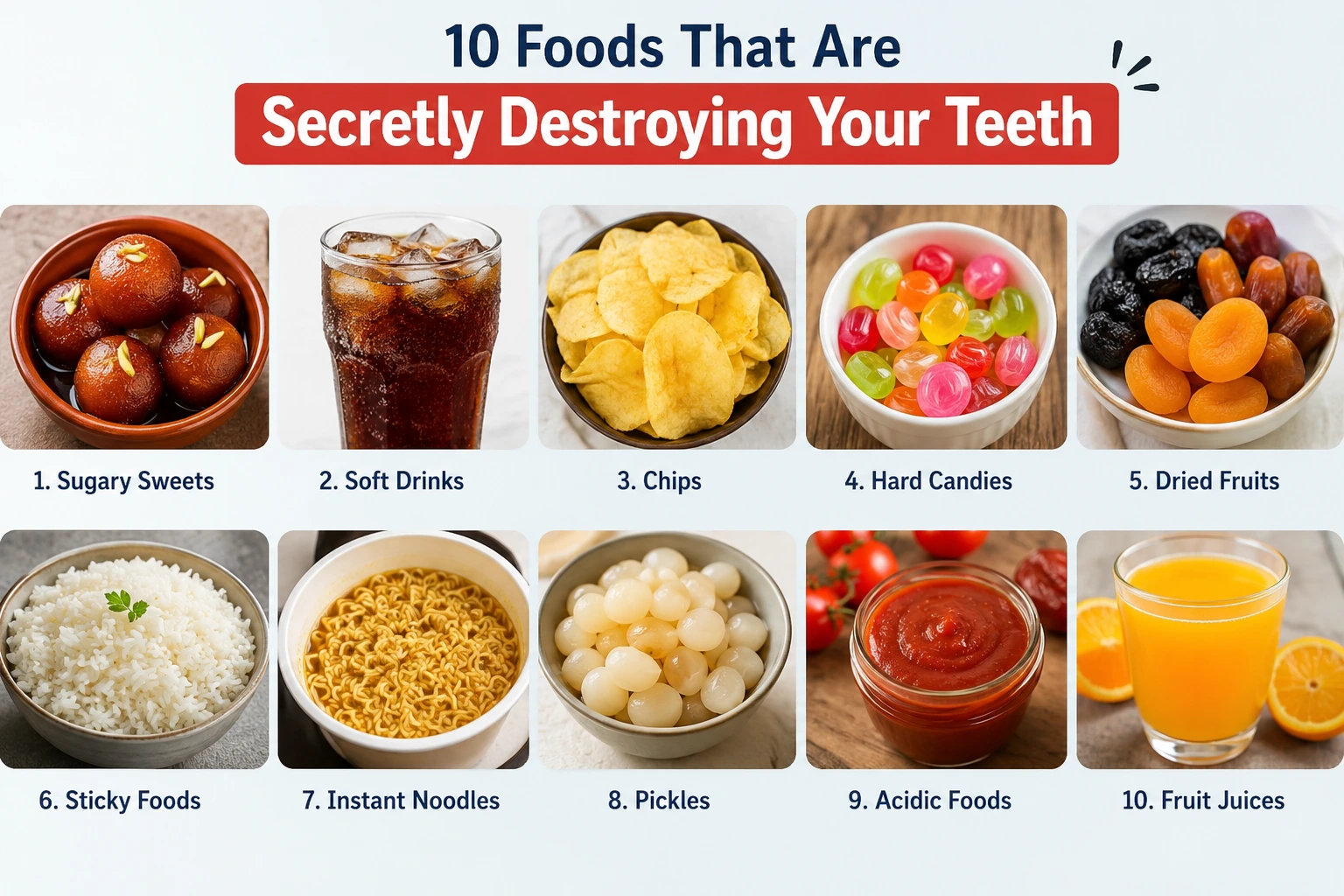
You brush twice a day. You floss. You even use mouthwash. But are you unknowingly eating your way to tooth decay? Many foods that appear healthy — or at least harmless — are silently eroding your enamel, feeding harmful bacteria, and setting the stage for cavities, sensitivity, and gum disease.
At Tooth and Co Dental Clinic, we see this every day in our practice. Patients come in puzzled — 2018I take care of my teeth, so why do I still have cavities?2019 The answer, more often than not, is diet. Dr. Saloni Bavalekar walks you through 10 commonly consumed foods that are secretly destroying your teeth — and what you can do about it.
1. Fizzy Cold Drinks (Soda & Colas)
Whether it’s your evening Pepsi or a post-workout sports drink, fizzy beverages are among the most damaging substances your teeth regularly encounter. They contain two destructive forces: sugar (which feeds cavity-causing bacteria) and phosphoric or citric acid (which directly dissolves tooth enamel).
Even sugar-free diet colas are acidic enough to soften enamel with each sip. Sipping slowly over time is actually worse than drinking a glass quickly. Dr. Saloni Bavalekar advises rinsing your mouth with plain water after any fizzy drink and waiting at least 30 minutes before brushing.
- Damage: Enamel erosion, increased cavity risk, tooth sensitivity
- Swap with: Plain water, coconut water, or milk
2. Citrus Fruits (Lemons, Oranges, Grapefruits)
Here’s the irony — fruits promoted as superfoods for your body can be kryptonite for your teeth. Citrus fruits are naturally high in citric acid, which erodes tooth enamel with consistent exposure. Squeezing lemon juice into your water every morning? That daily habit may be slowly thinning your enamel over months and years.
This doesn’t mean you should stop eating fruit. Simply eat citrus as part of a meal (saliva buffers the acid), and always rinse with water afterward. Never brush immediately — you’ll scrub the softened enamel away.
- Damage: Enamel erosion, increased tooth sensitivity
- Tip: Use a straw when drinking citrus juices
3. Sticky Sweets & Candy (Toffees, Gummies, Mithai)
Indian households love their mithai — and there’s nothing wrong with enjoying sweets occasionally. But sticky sweets like toffees, gummies, caramels, and traditional barfis cling to the grooves and gaps between teeth long after you’ve eaten them. This prolonged sugar exposure is a feast for the Streptococcus mutans bacteria that causes tooth decay.
Hard candies are doubly problematic — they dissolve slowly (sustained sugar bath) and create a bite risk that can chip teeth. At Tooth and Co Dental Clinic, we advise brushing or at least rinsing immediately after eating sticky sweets.
- Damage: Rapid cavities, bacterial growth, potential tooth fractures
- Swap with: Dark chocolate (less sticky, antioxidant-rich)
4. White Bread, Crackers & Refined Carbs
Think sugar is only in sweets? Refined carbohydrates behave almost identically in your mouth. When you chew white bread or crackers, saliva immediately begins converting the starch into simple sugars. This sticky, sugary paste wedges between teeth and into grooves, creating an ideal breeding environment for bacteria.
Patients who snack on biscuits, pav, or crackers throughout the day keep their teeth in a near-constant state of acid attack. As a Dentist in Kothrud, Dr. Saloni Bavalekar recommends choosing whole grain alternatives and limiting between-meal snacking.
- Damage: Cavities in hard-to-reach areas, gum disease risk
- Swap with: Whole wheat bread, oats, or nuts
5. Alcohol & Wine
Alcohol dehydrates your mouth — and a dry mouth is a dentist’s nightmare. Saliva is your mouth’s natural defense system: it washes away food particles, neutralises acids, and delivers minerals that repair early enamel damage. When alcohol reduces saliva production, all of these protective mechanisms are compromised.
Red wine adds the additional problem of staining (from tannins) and acidity. White wine, while less likely to stain, is surprisingly more acidic. Beer contains both acids and fermentable sugars. The bottom line: alcohol in any form is harmful to your oral environment when consumed frequently.
- Damage: Dry mouth, enamel erosion, staining, gum disease risk
- Tip: Drink water alongside alcohol and stay hydrated
6. Tea & Coffee (With Sugar)
India runs on chai — but the combination of strong tea, milk, and two teaspoons of sugar consumed 3-4 times a day creates a significant cumulative risk. Both tea and coffee contain tannins that stain teeth and reduce saliva flow over time. Add sugar to the mix, and you have a perfect cavity-promoting cocktail.
Patients at the Dental Clinic in Kothrud often report multiple cups of sugary tea daily, unaware of its dental consequences. Switching to unsweetened or lightly sweetened tea and rinsing with water after each cup makes a significant difference.
- Damage: Staining, enamel erosion (if acidic), cavity risk
- Tip: Reduce sugar, use a straw, rinse after each cup
7. Dried Fruits (Raisins, Dates, Apricots)
Often marketed as a “healthy snack,” dried fruits are essentially concentrated sugar in sticky form. When the water is removed from fruit during drying, the natural sugars become much more concentrated and the texture becomes adhesive — meaning it sticks to your teeth and stays there.
A handful of raisins can contain as much sugar as a candy bar, and that sugar clings to the grooves in your molars for hours. Dried dates — a popular health food — are particularly sticky and sweet. Always brush or rinse after consuming dried fruit.
- Damage: Cavities, sugar-fed bacterial growth
- Swap with: Fresh fruits that have high water content
8. Ice (Yes, Chewing Ice)
It seems harmless — it’s just water, right? But the habit of chewing ice is one of the top reasons people visit emergency dental clinics. The extreme hardness and cold temperature of ice can micro-crack tooth enamel over time. One unlucky crunch can crack a tooth outright, break a filling, or damage a crown.
This is especially concerning at the Best Dental Clinic in Kothrud where we see ice-related dental fractures frequently during summer months. If you love the cooling sensation, opt for chilled water instead.
- Damage: Chipped teeth, cracked enamel, broken restorations
- Swap with: Let ice melt in your mouth instead of chewing it
9. Pickles & Vinegar-Based Foods
Pickles, achaar, vinegar dressings, and fermented snacks are all highly acidic — and that acid directly attacks tooth enamel every time you eat them. Acetic acid (the main component of vinegar) has a pH of around 2-3, making it nearly as acidic as battery acid in concentrated form.
For people searching for a Dental Clinic Near Me due to sudden tooth sensitivity, a pickle-heavy diet is often a contributing factor. Limit frequent pickle consumption and always rinse your mouth thoroughly afterward.
- Damage: Enamel erosion, dentin exposure, sharp sensitivity
- Tip: Eat pickles with meals, not as standalone snacks
10. Packaged Fruit Juices & Energy Drinks
Packaged fruit juices — even those labelled “100% natural” — are stripped of fibre and loaded with concentrated sugars. They also often contain added citric acid as a preservative. Energy drinks are even worse: they combine high sugar content with acids (citric, tartaric, phosphoric) and a pH that rivals soft drinks.
Children who drink packaged juice from sippy cups throughout the day — often given by well-meaning parents as a “healthy” alternative to soda — are at particularly high risk for early childhood caries. As the Best Dentists Near Me in Kothrud, Pune, we urge parents to replace juice habits with water and fresh whole fruit for their children.
- Damage: Childhood cavities, enamel erosion, staining
- Swap with: Fresh-pressed juice consumed quickly, or whole fruit
How to Protect Your Teeth Without Giving Up Your Favourite Foods
You don’t have to eat bland food to have healthy teeth. Here are Dr. Saloni Bavalekar’s top practical tips to minimise dietary damage:
- Eat acidic foods as part of a meal, not on their own — saliva production during meals buffers acid effectively.
- Rinse your mouth with plain water immediately after eating or drinking anything acidic or sugary.
- Wait at least 30 minutes after eating before brushing — brushing immediately scrubs softened enamel.
- Use a fluoride toothpaste — fluoride helps remineralise early enamel damage before it becomes a cavity.
- Chew sugar-free xylitol gum after meals to stimulate saliva flow and neutralise acids.
- Drink water throughout the day to maintain a healthy salivary flow.
- Visit your dentist every 6 months for professional cleaning and early detection of diet-related damage.
- Ask your dentist about fluoride varnish or fissure sealants if you have a high-sugar diet.
Frequently Asked Questions (FAQs)
Q1: Which food is most damaging to teeth?
A: Fizzy cold drinks (sodas) are among the most damaging due to their combination of high sugar content and strong acids. However, the overall pattern of your diet matters more than any single food.
Q2: Can teeth recover from enamel erosion?
A: Enamel cannot regenerate, but early-stage damage can be partially reversed through remineralisation with fluoride. That’s why early diagnosis at a dental clinic is critical. Once erosion is significant, treatments like bonding or crowns may be needed.
Q3: Are natural sugars (honey, jaggery) safer for teeth than white sugar?
A: No. Natural sugars like honey, jaggery, and fruit sugar are metabolised by oral bacteria in exactly the same way as white sugar. They are not safer for your teeth, though they may have other health benefits.
Q4: How soon after eating should I brush my teeth?
A: Wait at least 30 minutes, especially after consuming acidic foods or drinks. Brushing immediately after can abrade softened enamel and cause more harm than good.
Q5: Should I stop eating fruit to protect my teeth?
A: Absolutely not. The minerals, vitamins, and fibre in fruit are essential for overall health and actually benefit your gum tissue. Simply eat fruit as part of a meal, avoid prolonged exposure, and rinse afterward.
Q6: How often should I visit the dentist if I eat a high-sugar diet?
A: If your diet is high in sugar or acidic foods, visiting every 3-4 months rather than the standard 6 months is advisable. Your dentist can monitor enamel thickness and catch cavities in their earliest — most treatable — stage.
Worried About Your Teeth? Book a Check-Up Today!
Knowledge is the first step — but a professional dental assessment is irreplaceable. At Tooth and Co Dental Clinic, Kothrud, we offer comprehensive oral health screenings, diet-specific risk assessments, and personalised treatment plans tailored to your unique needs.
Under the expert guidance of Dr. Saloni Bavalekar — one of the Best dentist in Kothrud — you’ll receive honest, evidence-based guidance on protecting your smile for decades to come.
Whether you’re experiencing tooth sensitivity, noticing wear on your enamel, or simply want to ensure your diet isn’t damaging your teeth, the team at Tooth & Co. is here to help. As one of the Best Dentists Near Me in Kothrud, Pune, we pride ourselves on pain-free, patient-first dental care.
Address : Ground Floor Jayanand Apartment, Opp Yatri Hotel, Paud Phata, Karve Road, Kothrud, Pune, 411038
Call : 7588121144