
Brushing alone removes only about 60% of the plaque on your teeth — the rest hides between teeth and along the gumline, exactly where a toothbrush can’t reach. That’s where flossing comes in. But with water flossers becoming increasingly popular, many patients now wonder: is traditional string floss still necessary, or has water flossing made it obsolete? This guide breaks down both methods so you can build an oral hygiene routine that actually works for your teeth and gums.
This blog has been reviewed by Dr. Saloni Bavalekar, who regularly guides patients at Tooth and Co Dental Clinic through personalized hygiene routines based on their specific dental needs.
What Is Traditional Flossing?
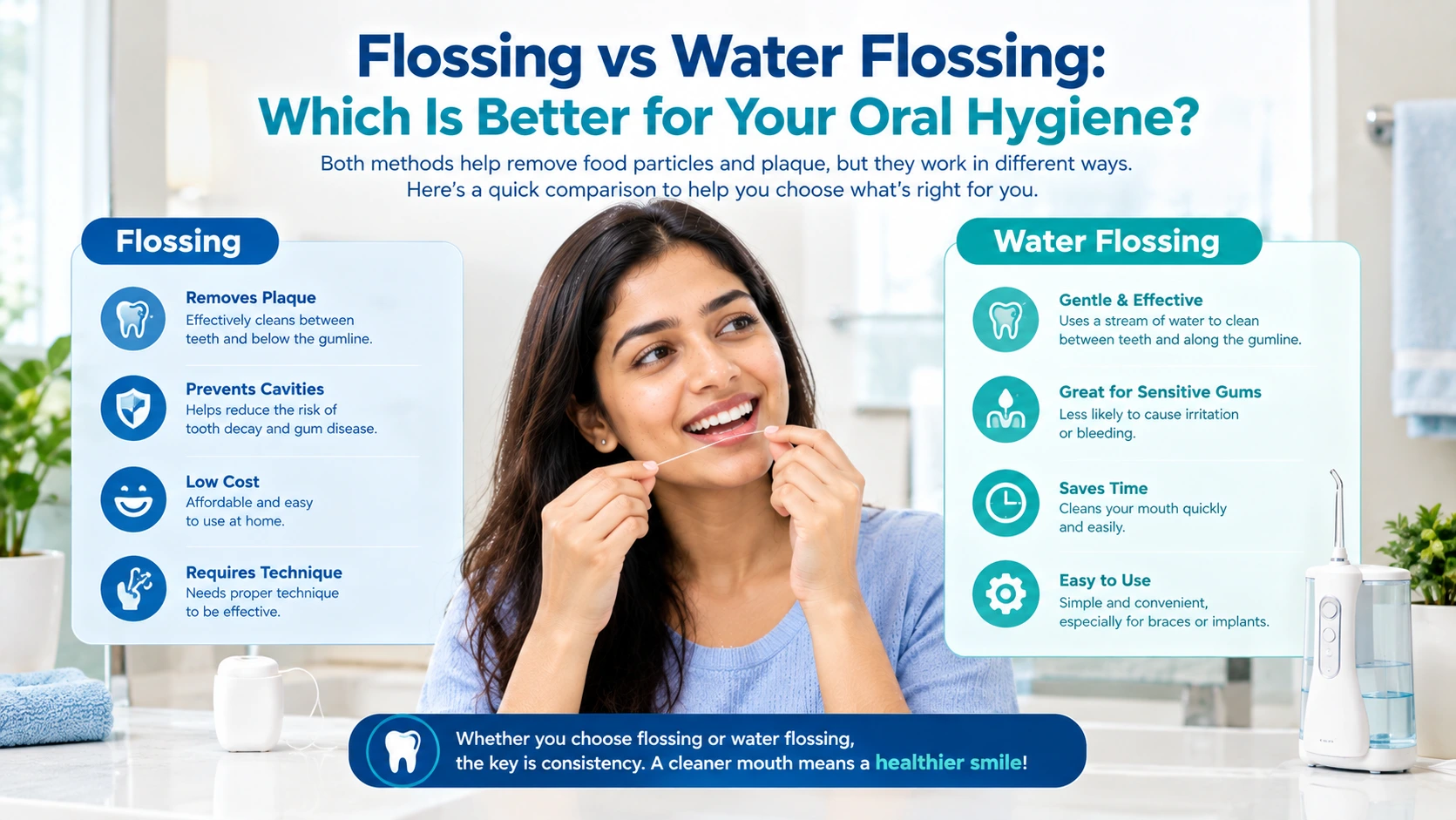
Traditional flossing uses a thin thread — usually nylon or PTFE — to physically scrape plaque and trapped food particles from between teeth and just below the gumline. It’s been the gold standard for interdental cleaning for decades because of its precision and low cost. When done correctly, floss can reach tight contact points between teeth that brushes simply can’t access, making it highly effective at preventing cavities that form in these hidden spaces.
What Is Water Flossing?
A water flosser, also called an oral irrigator, uses a targeted, pulsating stream of water to dislodge plaque and debris from between teeth and along the gumline. Rather than physically scraping the surface, it flushes particles away with pressure. Many patients find it more comfortable, especially those with braces, bridges, implants, or sensitive gums, since there’s no thread to maneuver around dental hardware.
Traditional Flossing: Pros and Cons
String floss is inexpensive, portable, and doesn’t require electricity or charging, making it convenient for travel. It also allows for very precise control, letting you feel exactly where plaque has built up. However, it does require good manual dexterity and technique — improper use can injure gums or leave areas under-cleaned. For patients visiting a trusted Dentist in Kothrud, proper flossing technique is often one of the simplest habits reviewed during a routine cleaning appointment, since even small technique errors can reduce its effectiveness over time.
Water Flossing: Pros and Cons
Water flossers are gentle on the gums, easy to use, and particularly effective for people with orthodontic appliances, crowns, or implants where string floss is difficult to maneuver. Studies suggest they can be highly effective at reducing gum bleeding and inflammation with consistent use. On the downside, they’re bulkier, require a power source or charging, and tend to cost more upfront than a simple spool of floss. They also may not remove very tightly packed plaque as precisely as string floss can in narrow contact points.
Which Is Better for Your Oral Hygiene?
The honest answer is: it depends on your mouth and your habits. For most people with healthy, naturally spaced teeth and good manual dexterity, traditional floss remains extremely effective and affordable. For patients with braces, dental work, arthritis, or gum sensitivity, water flossing often provides a more comfortable and consistent alternative. Many dental professionals now recommend combining both — using a water flosser for daily gum-line flushing and string floss for precise plaque removal in tight spaces — for the most thorough clean.
If you’re searching for the Best dentist in Kothrud to assess which method suits your gum health and tooth alignment, a hands-on evaluation is the most reliable way to get a personalized recommendation rather than relying on generic advice online.
Who Should Choose What?
- Choose string floss if: You have naturally spaced, healthy teeth, prefer a low-cost option, and are comfortable with manual technique.
- Choose water flossing if: You have braces, implants, bridges, sensitive or bleeding gums, or find string floss physically difficult to use.
- Choose both if: You want maximum plaque and bacteria removal and are willing to spend a few extra minutes on your routine.
Patients often visit a Dental Clinic in Kothrud for a quick professional assessment before deciding which tool fits their daily routine best, since individual gum health and tooth spacing can make a real difference in results.
Expert Recommendation
At Tooth and Co Dental Clinic, Dr. Saloni Bavalekar typically recommends starting with whichever method a patient is most likely to use consistently — because the biggest factor in oral hygiene success isn’t the tool itself, but daily commitment. Inconsistent flossing, regardless of method, allows plaque to harden into tartar, which only a professional cleaning can remove. If you’re also considering cosmetic improvements alongside your hygiene routine, many patients pair consistent flossing habits with a Teeth whitening treatment in Kothrud to maintain both a healthy and a bright, confident smile.
Building a Complete Oral Hygiene Routine
Flossing — in either form — works best as part of a complete routine: brushing twice daily with fluoride toothpaste, flossing once daily, using an antimicrobial mouthwash if recommended, and visiting your dentist every six months for a professional cleaning and checkup. No single tool replaces regular professional care, especially for catching early gum disease or hidden cavities before they become bigger problems.
Frequently Asked Questions (FAQs)
Q1. Can water flossing completely replace string floss?
For most people, water flossing is a great addition but works best alongside, not as a complete replacement for, string floss — especially for tightly spaced teeth.
Q2. Is water flossing better for gum disease?
Studies suggest water flossers can be gentler and more effective at reducing gum inflammation, making them a good option for patients with gingivitis or sensitive gums.
Q3. How often should I floss?
Once a day is generally recommended, ideally before bed, regardless of which method you choose.
Q4. Does water flossing hurt?
No — when used at the correct pressure setting, it should feel like a gentle massage, not painful.
Q5. Which method do dentists recommend more?
Most dentists in Pune and across India recommend a combination approach, tailored to each patient’s dental history, gum sensitivity, and any existing dental work.
Ready to Upgrade Your Oral Hygiene Routine?
Whether you stick with traditional floss, switch to a water flosser, or combine both, the most important step is getting a professional assessment of your gum health and technique. If you’re looking for the Best Dental Clinic Near Me to review your oral hygiene routine and recommend the right tools for your smile, our team is here to help.
Book your appointment with Tooth and Co Dental Clinic today and let Dr. Saloni Bavalekar guide you toward healthier gums and a more confident smile.