
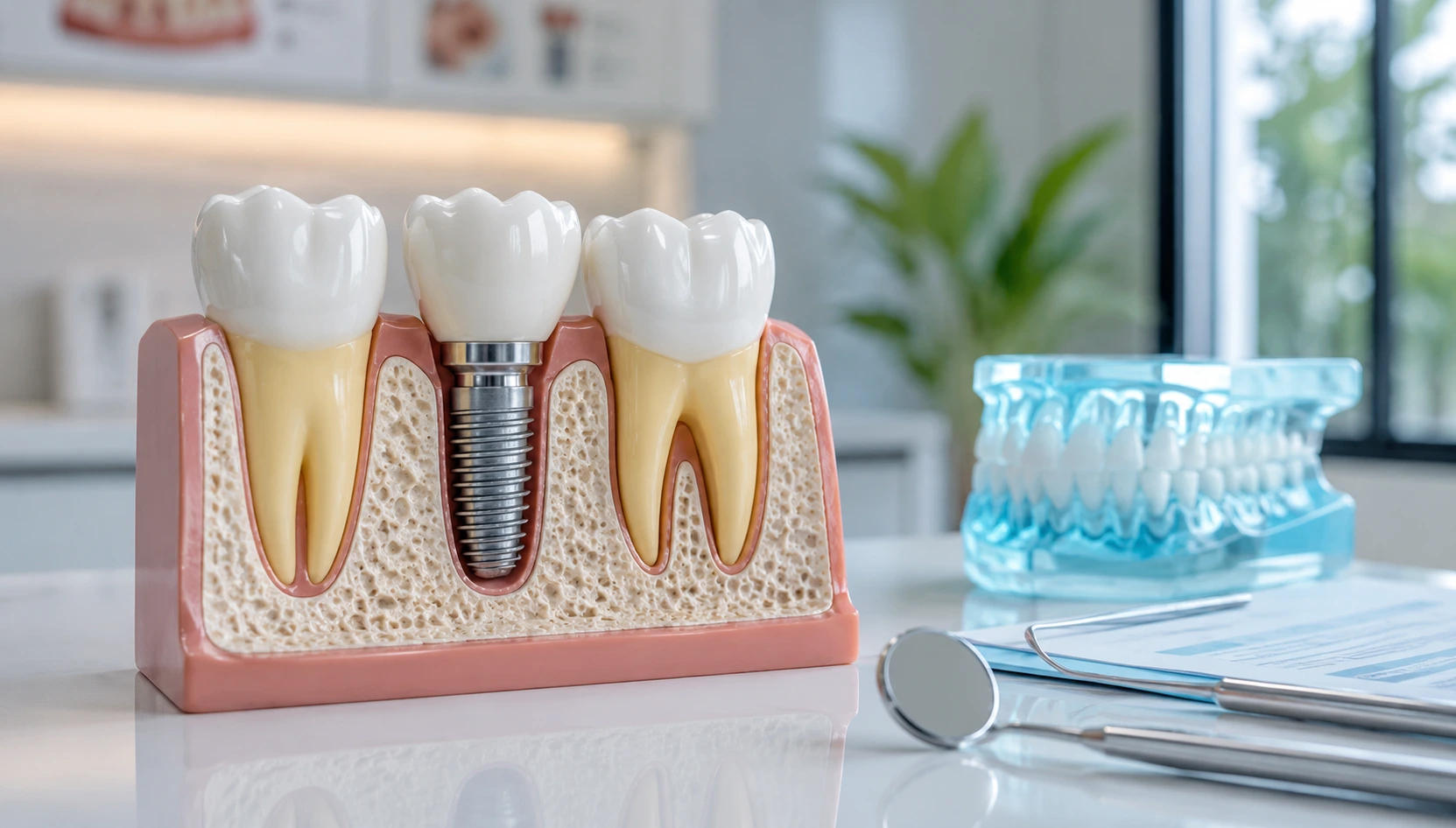
A dental implant is one of the most reliable ways to replace a missing tooth, but the implant itself is only one part of the complete restoration. The visible tooth that restores your smile and helps you chew is called the dental implant crown. It is attached to the dental implant through a connector known as an abutment.
For patients considering Dental Implant In Kothrud, understanding the role of the crown is important because the final appearance, comfort, bite, and function of an implant-supported tooth depend greatly on the quality and design of the crown.
At Tooth and Co Dental Clinic, Dr. Saloni Bavalekar evaluates the condition of your teeth, gums, jawbone, bite, and overall oral health before recommending the appropriate implant restoration.
What Is a Dental Implant Crown?
A dental implant crown is a custom-made artificial tooth placed over a dental implant. It replaces the visible portion of a missing natural tooth while the implant replaces the tooth root.
A complete single-tooth implant restoration generally has three components:
- Dental implant: A small titanium or compatible implant placed into the jawbone to function as an artificial tooth root.
- Abutment: A connector that joins the implant to the crown.
- Dental crown: The visible tooth-shaped restoration designed to resemble a natural tooth.
Once the implant has integrated with the surrounding bone and the soft tissues are healthy, the dentist can plan and place the final crown.
Why Is the Dental Implant Crown Important?
The crown is more than a cosmetic covering. It plays an important role in restoring everyday oral function.
1. It Restores the Appearance of a Missing Tooth
A missing tooth can affect the appearance of your smile, particularly when it is located toward the front of the mouth. An implant crown can be individually designed to match the surrounding teeth in terms of shape, size, shade, and overall appearance.
Modern digital planning and dental laboratory techniques can help create restorations that look natural when they are properly planned and fitted.
2. It Helps Restore Chewing Function
Missing teeth can make it difficult to bite and chew certain foods comfortably. A properly designed implant crown provides a stable chewing surface and helps restore normal oral function.
The dentist must consider the patient’s bite when designing the crown. An implant crown that is too high or improperly positioned can place unnecessary stress on the restoration and surrounding structures.
3. It Supports a Natural-Looking Smile
The shape and position of the crown influence the final appearance of an implant restoration. Factors such as tooth proportions, gum contours, neighboring teeth, and smile line need to be considered.
This is why implant treatment should not focus only on placing the implant. The final restoration should also be planned from a functional and aesthetic perspective.
4. It Helps Maintain the Tooth Replacement
The implant provides support below the gumline, while the crown restores the visible tooth portion. Together, these components create a complete tooth replacement.
Proper oral hygiene, regular dental examinations, and professional maintenance are essential for protecting the implant and crown over time.
What Materials Are Used for Implant Crowns?
Dental implant crowns can be made from different materials. The appropriate option depends on factors such as tooth location, bite forces, aesthetic expectations, available space, and individual oral health.
Common materials include:
Zirconia Crowns
Zirconia is a strong ceramic material that can provide an attractive, tooth-coloured restoration. It is commonly considered for patients who want a combination of strength and aesthetics.
Porcelain or Ceramic Crowns
Ceramic and porcelain-based restorations can offer a natural appearance and may be particularly suitable when aesthetics are a major concern.
Porcelain-Fused-to-Metal Crowns
These restorations combine a metal substructure with a tooth-coloured outer layer. Although newer ceramic materials are widely used today, porcelain-fused-to-metal restorations may still be considered in selected cases.
Your dentist can recommend the material according to the location of the missing tooth and your individual requirements.
How Is a Dental Implant Crown Placed?
The implant crown procedure generally involves several stages.
Step 1: Dental Examination and Treatment Planning
The dentist evaluates the missing tooth area, surrounding teeth, gums, jawbone, and bite. Dental X-rays or 3D imaging may be recommended when necessary.
Step 2: Implant Placement
The dental implant surgery is performed by placing the implant into the jawbone.A healing period may be required for the implant to integrate with the bone.
Step 3: Healing and Osseointegration
During healing, the implant gradually becomes integrated with the surrounding bone. The duration varies from patient to patient and depends on factors such as bone quality, implant location, and the treatment approach.
Step 4: Abutment Placement
After the implant is ready for restoration, an abutment may be connected to the implant. In some treatment approaches, the abutment and crown planning can be managed differently depending on the implant system and clinical situation.
Step 5: Crown Fabrication and Placement
The dentist records the required measurements and shade information. The crown is then fabricated according to the planned specifications.
Once the crown is ready, it is attached to the implant and checked for fit, appearance, and bite.
How Is an Implant Crown Different From a Regular Dental Crown?
A traditional dental crown is generally placed over a prepared natural tooth. An implant crown, on the other hand, is supported by a dental implant rather than a natural tooth.
The basic difference is:
| Feature | Traditional Crown | Implant Crown |
|---|---|---|
| Support | Natural tooth | Dental implant |
| Tooth root | Natural root remains | Implant replaces the root |
| Purpose | Restores a damaged tooth | Replaces a missing tooth |
| Connector | Usually directly over the prepared tooth | Usually connected through an abutment |
| Treatment planning | Focuses on existing tooth | Includes implant, bone, gum, bite, and crown |
For patients requiring several restorations, treatment may also involve Crowns & bridges treatment in Kothrud, depending on the condition and number of missing or damaged teeth.
Who May Need a Dental Implant Crown?
An implant crown may be considered for an adult who has lost a single tooth and has suitable oral and general health for implant treatment.
However, not every missing tooth can immediately receive a crown. The dentist first needs to determine whether there is adequate bone support and healthy gum tissue.
Factors that may influence treatment include:
- Jawbone volume and density
- Gum health
- Oral hygiene
- Bite and chewing forces
- Location of the missing tooth
- Smoking or tobacco use
- Existing dental conditions
- Overall treatment requirements
If there is insufficient bone, additional procedures such as bone augmentation may sometimes be considered before or along with implant treatment.
What About Multiple Missing Teeth?
A dental implant crown is particularly useful for replacing an individual missing tooth. When several teeth are missing, other implant-supported solutions may be considered.
For patients with extensive tooth loss, treatment planning may involve implant-supported bridges, implant-retained dentures, or Full mouth dental implants in Kothrud, depending on the condition of the remaining teeth, bone, gums, bite, and overall treatment goals.
The right approach should always be determined after an individual examination rather than selecting a treatment solely based on cost or appearance.
How Long Does a Dental Implant Crown Last?
The lifespan of an implant crown varies from person to person. Factors such as oral hygiene, bite forces, crown material, dental habits, regular maintenance, and the health of the tissues around the implant can influence longevity.
Although dental implants and crowns can provide long-term tooth replacement, they are not completely maintenance-free.
To protect your restoration:
- Brush twice daily with a soft-bristled toothbrush.
- Clean between your teeth and around the implant.
- Follow your dentist’s recommended hygiene routine.
- Avoid using teeth to open packages or bite hard objects.
- Attend regular dental check-ups.
- Inform your dentist if the crown feels loose or uncomfortable.
- Seek professional care if you experience swelling, bleeding, pain, or changes around the implant.
What Can Cause Problems With an Implant Crown?
Several issues can affect an implant crown or the tissues surrounding an implant.
Crown Loosening
An implant crown may become loose because of mechanical or bite-related issues. It should be professionally examined rather than repeatedly used or adjusted at home.
Chipping or Fracture
Excessive chewing forces, accidental trauma, or certain habits can contribute to crown damage.
Bite Problems
If the crown does not fit properly with the opposing teeth, it may feel uncomfortable while biting. A dental professional can evaluate and adjust the restoration when appropriate.
Gum Inflammation
Poor oral hygiene can allow plaque to accumulate around an implant. Inflammation around implants can become a serious concern if it is not addressed.
This is why implant treatment should always be followed by appropriate maintenance.
Choosing the Right Dentist for Dental Implant Treatment
The success of implant treatment involves much more than the implant itself. Diagnosis, treatment planning, implant placement, restoration design, bite management, hygiene, and follow-up all matter.
When choosing a Best implantologist in Kothrud, patients should consider:
- Experience with implant treatment
- Diagnostic and treatment-planning approach
- Sterilization and infection-control protocols
- Implant systems and restorative options offered
- Quality of communication and follow-up
- Individualized treatment planning
- Management of complex cases when required
If you are looking for a Best dentist in Kothrud, selecting a clinic that takes a comprehensive approach to diagnosis and restoration can help you make a more informed decision.
Why Choose Tooth and Co Dental Clinic?
At Tooth and Co Dental Clinic, implant treatment is planned according to the patient’s oral health, functional requirements, aesthetic expectations, and long-term dental goals.
Dr. Saloni Bavalekar focuses on explaining the treatment process clearly so patients understand what each stage involves. From assessment and implant planning to crown placement and maintenance, the objective is to provide a structured treatment experience.
Patients searching for a Dental Clinic in Kothrud can discuss their concerns during a consultation and determine whether an implant-supported restoration is appropriate for their specific situation.
For individuals searching for a Dentist in Kothrud, a professional evaluation is the best starting point because implant treatment should be customized rather than based on a standard approach.
Dental Implant Crown Care After Treatment
Once the crown is placed, maintaining good oral hygiene is essential.
Daily Cleaning
Brush carefully around the implant crown and clean the spaces between teeth. Your dentist may recommend floss, interdental brushes, or other cleaning aids depending on the restoration.
Regular Dental Visits
Regular examinations allow your dentist to monitor the crown, implant, gums, and surrounding teeth.
Watch for Warning Signs
Contact your dentist if you notice:
- Persistent discomfort
- Bleeding or swelling
- A loose crown
- Difficulty chewing
- A change in your bite
- Unusual movement
- Damage or chipping of the crown
Early assessment can help identify problems before they become more complicated.
Frequently Asked Questions About Dental Implant Crowns
1. Is an implant crown the same as a dental implant?
No. The implant is the artificial tooth root placed in the jawbone. The crown is the visible tooth-shaped restoration attached to the implant.
2. Does getting an implant crown hurt?
The level of discomfort varies depending on the treatment stage. Implant placement is performed with appropriate local anesthesia, while crown placement itself generally does not involve surgical discomfort.
3. Can an implant crown look like a natural tooth?
Yes. Implant crowns are individually designed to match the surrounding teeth as closely as practical in shape, colour, and proportions.
4. How long does it take to get an implant crown?
The overall treatment timeline varies. Healing and implant integration can require several months in some cases, while the crown stage itself is generally completed after the implant is ready for restoration.
5. Can I chew normally with an implant crown?
Once the restoration has been properly placed and your dentist confirms that it is functioning correctly, an implant crown is designed to restore chewing function. However, extremely hard foods and damaging habits should be avoided.
6. What happens if my implant crown becomes loose?
Do not try to fix it yourself. Contact your dentist so the crown and implant can be examined and the appropriate treatment can be provided.
7. Can one implant replace one missing tooth?
Yes. A single implant can often support an individual crown when the patient is an appropriate candidate for implant treatment.
8. Are implant crowns suitable for everyone?
Not necessarily. Bone availability, gum health, oral hygiene, bite, medical considerations, and other factors need to be assessed before treatment.
Conclusion
A dental implant crown is an essential part of a complete implant-supported tooth replacement. While the implant provides foundation and stability, the crown restores the visible tooth structure, chewing function, and appearance.
Choosing the right treatment plan, crown material, implant system, and maintenance routine can make an important difference to the long-term performance of the restoration.
If you are considering an implant for a missing tooth or want to understand whether implant-supported treatment is suitable for you, schedule a consultation at Tooth and Co Dental Clinic with Dr. Saloni Bavalekar. A detailed examination can help determine the most appropriate option for your oral health and smile goals.
Ready to Explore Your Tooth Replacement Options?
Don’t let a missing tooth affect your confidence or everyday eating. Contact Tooth and Co Dental Clinic to discuss your dental implant requirements, understand the treatment process, and receive a personalized treatment plan.