
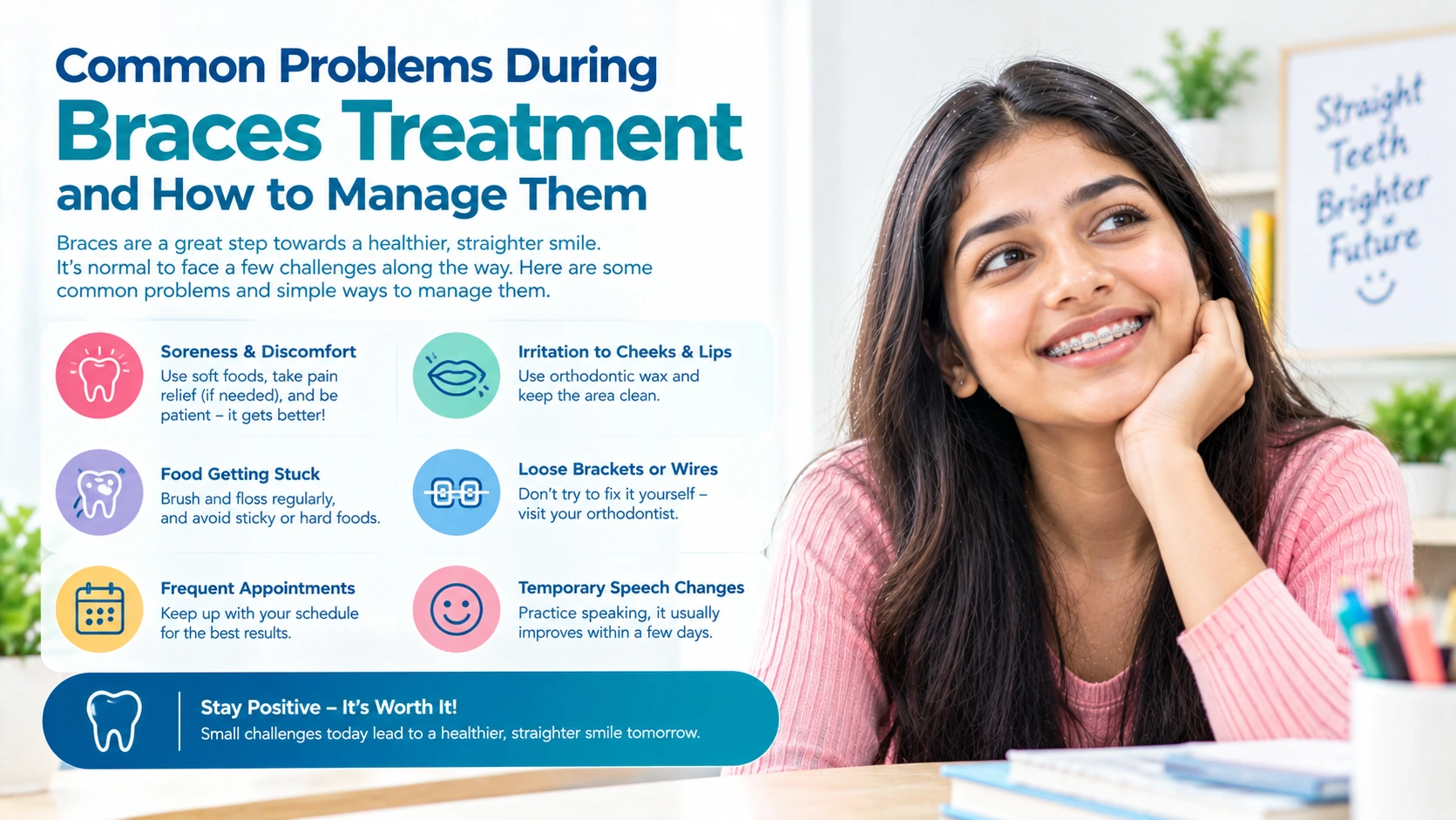
Getting braces is a big step toward a straighter smile, but the journey isn’t always smooth. From soreness after adjustments to the occasional poking wire, most patients run into at least one hiccup during treatment. The good news is that nearly every common braces problem has a simple, manageable solution — and knowing what to expect ahead of time makes the entire process far less stressful. This guide walks through the most frequent issues patients face during orthodontic treatment and exactly how to handle each one.
This blog has been reviewed by Dr. Saloni Bavalekar, who works closely with braces patients at Tooth and Co Dental Clinic to make treatment as comfortable and predictable as possible.
1. Soreness and Discomfort After Adjustments
It’s completely normal to feel tenderness in your teeth and gums for two to three days after braces are tightened. This happens because your teeth are gradually shifting position, and the surrounding tissue needs time to adjust.
How to manage it: Stick to soft foods for the first few days after an adjustment, rinse with warm salt water to soothe gums, and use an over-the-counter pain reliever if needed. The discomfort typically fades on its own within 48–72 hours.
2. Mouth Sores and Cheek Irritation
Brackets and wires can rub against the inside of your cheeks and lips, especially in the first few weeks as your mouth adjusts to the new hardware. This friction often leads to small sores or ulcers.
How to manage it: Orthodontic wax is your best friend here — simply press a small ball over the bracket causing irritation to create a smooth barrier. Rinsing with warm salt water also speeds up healing. If sores persist beyond a week, it’s worth getting checked by a Dentist in Kothrud to rule out an ill-fitting bracket.
3. Loose or Broken Brackets
Brackets can loosen or pop off if you bite into hard or sticky foods, or from general wear over time. A loose bracket doesn’t usually cause pain, but it can slow down your treatment progress if left unaddressed.
How to manage it: If a bracket comes loose but is still attached to the wire, cover it with orthodontic wax and contact your clinic promptly. Avoid hard, chewy, or sticky foods like caramel, nuts, and ice, which are the most common culprits behind bracket damage.
4. Poking or Broken Wires
A wire that shifts out of place or snaps can poke into the cheek or gum, causing sharp discomfort. This is one of the more urgent issues patients report during treatment.
How to manage it: Use the eraser end of a pencil to gently push the wire back into a less irritating position, or cover the tip with orthodontic wax. If the wire continues to cause pain or cuts the inside of your mouth, schedule an urgent visit rather than waiting for your next routine appointment.
5. Difficulty Eating Certain Foods
Many patients underestimate how much braces change eating habits. Hard, crunchy, or sticky foods can damage brackets or get lodged between wires, making meals frustrating in the early weeks.
How to manage it: Cut fruits and vegetables into smaller pieces, avoid whole apples or corn on the cob, and steer clear of caramel, gum, and popcorn. Soft foods like pasta, yogurt, and cooked vegetables are safer choices, especially right after adjustments.
6. Increased Plaque Buildup and Difficulty Cleaning
Brackets and wires create more surface area for food particles and plaque to collect, which raises the risk of cavities and gum inflammation if oral hygiene isn’t stepped up during treatment.
How to manage it: Use an orthodontic toothbrush or a water flosser designed for braces, along with interdental brushes to clean around brackets. Routine professional cleanings become even more important during treatment — many patients booked with the Best dentist in Kothrud find that more frequent hygiene visits keep their teeth and gums healthy throughout the process.
7. Speech Changes
A slight lisp or altered speech pattern is common in the first few days after getting braces, particularly with certain “s” and “th” sounds, as your tongue adjusts to the new hardware in your mouth.
How to manage it: This usually resolves naturally within one to two weeks as you get used to speaking with brackets and wires. Practicing reading aloud can help speed up adjustment.
When to See Your Orthodontist
While most braces issues can be managed at home temporarily, some situations call for a prompt clinic visit — persistent pain that doesn’t improve, a wire that can’t be repositioned safely, a bracket that has fully detached, or signs of infection like swelling or fever. Patients undergoing Braces Treatment in Kothrud are encouraged to keep their clinic’s contact information handy for exactly these situations, since quick action prevents small issues from delaying overall treatment time.
Making Orthodontic Treatment Smoother From the Start
Choosing the right clinic from day one makes a significant difference in how smoothly your treatment goes. A clinic offering Best Orthodontic Treatments in Kothrud will not only fit your braces correctly but also walk you through exactly what to expect at each stage, reducing surprises and emergency visits. At Tooth and Co Dental Clinic, Dr. Saloni Bavalekar ensures every patient leaves each appointment with clear aftercare instructions, so minor issues rarely turn into major setbacks.
If you’re comparing clinics, look for one offering comprehensive orthodontic care at a Dental Clinic In Kothrud Pune, with transparent guidance on adjustments, emergency support, and realistic treatment timelines.
Frequently Asked Questions (FAQs)
Q1. Is it normal for braces to hurt every time they’re adjusted?
Yes, mild soreness for a few days after each adjustment is expected. Sharp or persistent pain, however, should be checked by your orthodontist.
Q2. What should I do if a bracket falls off completely?
Keep the bracket if possible and contact your clinic as soon as you can. Avoid chewing on that side of your mouth until it’s repaired.
Q3. Can I remove a loose wire myself?
It’s best not to remove it entirely — use wax to manage discomfort and let your orthodontist handle the repair to avoid affecting your treatment plan.
Q4. How can I prevent most braces problems?
Follow dietary guidelines closely, maintain excellent oral hygiene, and attend all scheduled adjustment appointments to catch small issues early.
Q5. How long do braces problems typically last?
Most discomfort and irritation are temporary, resolving within days to a couple of weeks as your mouth adapts to the braces.
Ready for Hassle-Free Orthodontic Care?
Braces treatment doesn’t have to be stressful when you have the right support system in place. If you’re experiencing discomfort or simply want expert guidance from the start of your journey, our team is here to help. Searching for a Best Dental Clinic Near Me that prioritizes patient comfort throughout orthodontic treatment? Look no further.
Book your consultation with Tooth and Co Dental Clinic today and let Dr. Saloni Bavalekar guide you through a smooth, comfortable braces journey.