
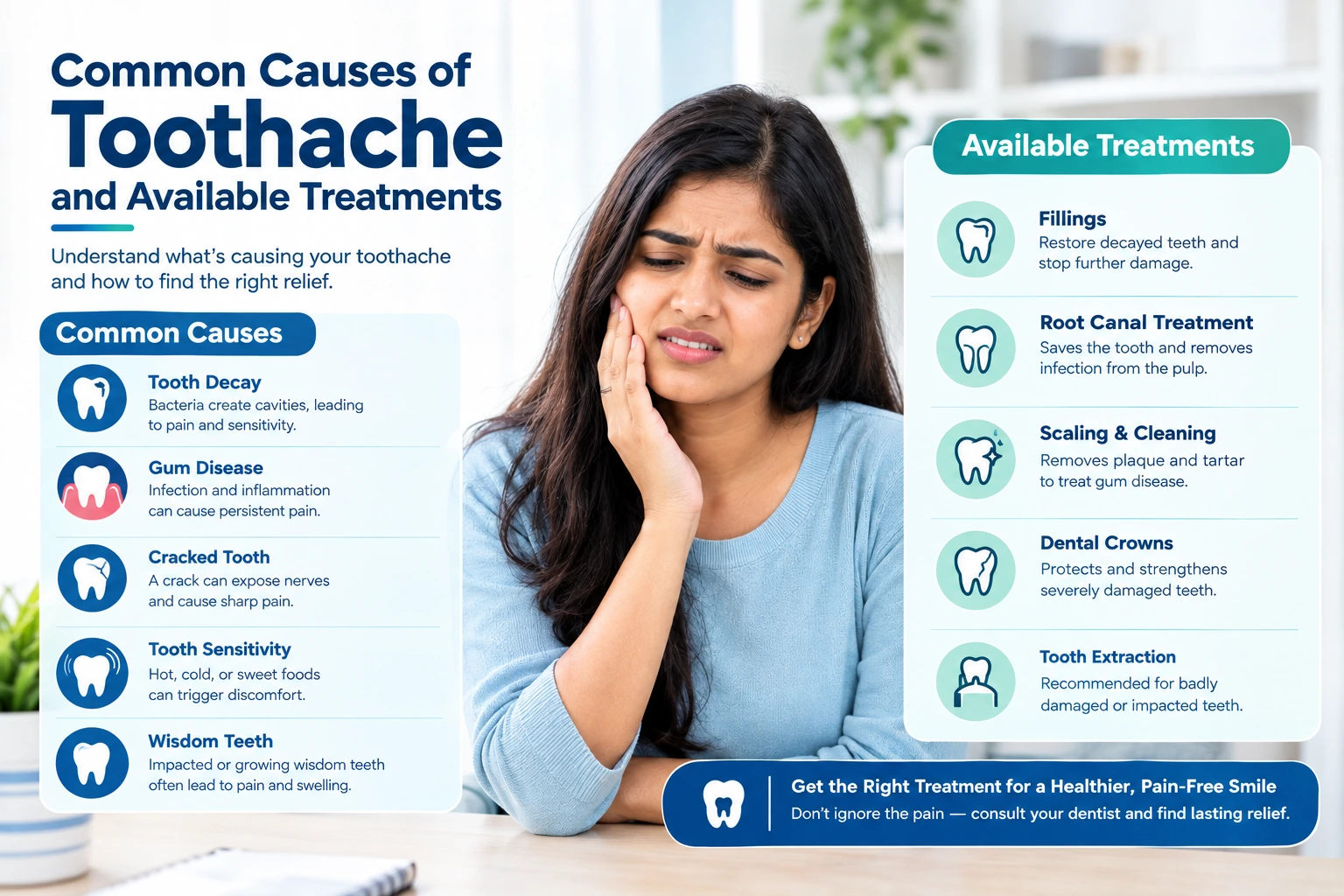
Toothache is one of the most common dental problems and can range from mild sensitivity to severe, persistent pain. Sometimes the discomfort appears only while eating or drinking, while in other cases it can continue throughout the day or become worse at night.
Although painkillers or home remedies may provide temporary relief, toothache is usually a sign that something needs attention. The cause may be as simple as tooth sensitivity or as serious as a dental infection. Identifying the underlying problem is important for choosing the right treatment.
At Tooth and Co Dental Clinic, Dr. Saloni Bavalekar focuses on understanding the cause of dental discomfort before recommending an appropriate treatment plan.
Search Intent Analysis
People searching for information about toothache usually want to know:
- Why does my tooth hurt?
- What are the most common causes of toothache?
- Can tooth pain go away on its own?
- When should I visit a dentist?
- What treatments are available for toothache?
- Does every toothache require a root canal?
- How can toothache be prevented?
Understanding these questions can help patients recognize warning signs and seek professional dental care at the right time.
What Is Toothache?
Toothache refers to pain or discomfort affecting a tooth or the surrounding tissues. The sensation can be sharp, throbbing, dull, or constant.
The location and type of pain can provide useful clues, but symptoms alone are not enough to determine the exact cause. A dental examination may be required to identify the source of the problem.
Pain while biting, sensitivity to hot or cold, swelling, a bad taste in the mouth, or persistent discomfort can all indicate the need for professional evaluation.
Common Causes of Toothache
1. Tooth Decay
Tooth decay is one of the most frequent causes of dental pain. It develops when bacteria and acids gradually damage the tooth’s outer layers.
Early decay may not cause noticeable symptoms. As the cavity becomes deeper, patients may experience sensitivity or pain when consuming sweet, hot, or cold foods and drinks.
Depending on the extent of decay, treatment may involve a dental filling. If the decay reaches the inner part of the tooth, more extensive treatment may be necessary.
2. Dental Infection
A bacterial infection inside or around a tooth can cause significant pain. Patients may experience throbbing discomfort, swelling, tenderness, or sensitivity.
In some cases, an infection can develop from untreated tooth decay or an injury to the tooth. Dental infections should not be ignored because they can progress and affect surrounding tissues.
Treatment depends on the source and severity of the infection. The dentist may recommend root canal treatment, drainage, restoration, or other appropriate care.
3. Tooth Sensitivity
Some people experience a sudden sharp sensation when consuming hot, cold, sweet, or acidic foods.
Sensitivity can occur when the protective enamel becomes worn or when the tooth’s root surface becomes exposed. Aggressive brushing, gum recession, enamel erosion, and certain dental conditions may contribute to sensitivity.
A dentist can identify the underlying cause and recommend suitable preventive or desensitizing measures.
4. Cracked or Damaged Teeth
A cracked tooth may cause pain while chewing or biting. Some patients experience discomfort when releasing their bite rather than when applying pressure.
Cracks can result from injuries, grinding, biting hard foods, or weakened teeth. Treatment depends on the location and severity of the crack and may include bonding, a crown, root canal treatment, or extraction in severely damaged cases.
5. Gum Disease
Tooth pain is not always caused by the tooth itself. Inflamed or infected gums can also produce discomfort.
Gum disease may cause swelling, bleeding while brushing, bad breath, tenderness, or gum recession. When periodontal problems progress, the supporting structures around teeth can become affected.
Professional dental and periodontal care can help manage gum problems and protect the supporting tissues.
6. Food Trapped Between Teeth
Sometimes discomfort is caused by food becoming trapped between teeth. This can place pressure on the gums and cause localized irritation.
Gentle cleaning between the teeth may help remove the trapped food. However, if pain or swelling continues, a dental examination is advisable because there may be an underlying cavity, gum problem, or other issue.
7. Wisdom Tooth Problems
Wisdom teeth can sometimes cause pain when they do not have enough space to erupt properly. They may become partially impacted, making the surrounding gum difficult to clean.
This can contribute to swelling, inflammation, food accumulation, or infection. Depending on the position and condition of the tooth, the dentist may recommend monitoring, cleaning, treatment, or removal.
Available Treatments for Toothache
The appropriate treatment depends entirely on the underlying cause.
Dental Fillings
For cavities that have not significantly affected the tooth’s inner tissues, removing the decayed portion and restoring the tooth with a filling may be sufficient.
Root Canal Treatment
If decay or infection reaches the pulp of the tooth, root canal treatment may be recommended. The procedure involves removing infected or damaged pulp tissue, cleaning the root canals, and sealing the tooth.
A dental crown may subsequently be recommended when additional strength and protection are needed.
Professional Cleaning and Gum Treatment
When discomfort is associated with plaque, tartar, or gum disease, professional cleaning and periodontal treatment may be appropriate.
Improving daily oral hygiene can also help reduce the risk of future gum problems.
Dental Crowns
A crown may be considered when a tooth has been significantly weakened by decay, cracks, large restorations, or previous treatment.
The crown covers the visible portion of the tooth and can help restore its function and appearance.
Tooth Extraction
Extraction may be considered when a tooth is severely damaged or cannot be predictably restored. Dentists generally aim to preserve natural teeth whenever possible, but removal may sometimes be the safest option.
When Should You Visit a Dentist?
A person searching for a Dental Clinic Near Me may be experiencing sudden discomfort and wondering whether an appointment is necessary.
You should consider professional evaluation if toothache:
- Lasts more than a day or two
- Keeps returning
- Becomes severe
- Causes swelling
- Is associated with fever
- Makes chewing difficult
- Causes sensitivity that persists
- Is accompanied by a bad taste or discharge
- Follows an injury to the tooth
Severe swelling affecting the face or difficulty breathing or swallowing requires urgent medical attention.
Why Professional Diagnosis Matters
Pain is a symptom, not a diagnosis. Two people with similar toothache symptoms may require completely different treatments.
When choosing a Dental Clinic in Kothrud, patients should consider whether the clinic provides comprehensive examination, appropriate diagnostic evaluation, clear explanations, and personalized treatment planning.
Avoiding treatment because the pain temporarily disappears can sometimes allow the underlying problem to continue developing.
Choosing the Right Dental Professional
A dental professional should explain the cause of the problem, available treatment options, expected outcomes, and necessary follow-up care.
If you are searching for a Dentist in Kothrud, consider professional experience, communication, treatment approach, hygiene standards, and the clinic’s ability to provide appropriate ongoing care.
Patients looking for Best Dentists Near Me in Kothrud, Pune should also look beyond convenience and online ratings. A long-term dental relationship should focus on prevention as well as treatment.
Why Choose Tooth and Co Dental Clinic?
At Tooth and Co Dental Clinic, dental care is centered around understanding individual patient needs.
Dr. Saloni Bavalekar evaluates dental concerns carefully and explains treatment options in a way that helps patients make informed decisions about their oral health.
Whether the problem involves tooth decay, sensitivity, gum discomfort, or persistent tooth pain, identifying the underlying cause is an important first step toward appropriate treatment.
For patients comparing options and looking for the Best Dental Clinic in Kothrud, personalized consultation and comprehensive care can make the dental experience more comfortable and reassuring.
Frequently Asked Questions
Q1. Can toothache go away without treatment?
Some mild discomfort may temporarily disappear, but this does not necessarily mean the underlying problem has resolved. Persistent or recurring pain should be professionally evaluated.
Q2. Does every toothache require a root canal?
No. Treatment depends on the cause. A cavity may need a filling, while sensitivity may require preventive care. Root canal treatment is generally considered when the pulp becomes infected or irreversibly damaged.
Q3. Can a cavity cause severe tooth pain?
Yes. As decay progresses deeper into the tooth, it can cause increasing sensitivity and pain.
Q4. What can I do for toothache until my appointment?
Maintain gentle oral hygiene, avoid foods that trigger the pain, and follow appropriate over-the-counter pain-relief guidance. Do not place aspirin directly on the tooth or gums.
Q5. How can I prevent toothache?
Brush twice daily with fluoride toothpaste, clean between your teeth, limit frequent sugary foods and drinks, avoid tobacco, and attend regular dental check-ups.
Conclusion
Toothache should not be considered a normal part of everyday life. It can result from cavities, infections, sensitivity, cracks, gum disease, wisdom tooth problems, or other dental conditions.
The right treatment depends on finding the actual cause. Early professional evaluation can help prevent a relatively manageable dental problem from becoming more complicated.
At Tooth and Co Dental Clinic, Dr. Saloni Bavalekar provides personalized dental guidance to help patients understand their symptoms and explore appropriate treatment options.